Range
Products at a glance11

TPump Series 216035-216055
Hand pump with two outlets and built-in flow regulator
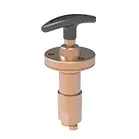
Pump series 12130
Hand pump without container
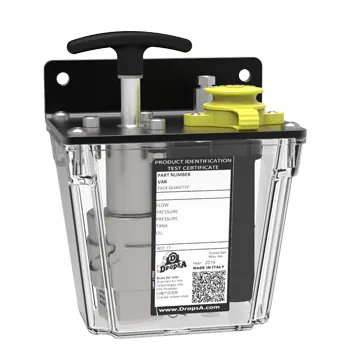
Smile
The most efficient manual lubrication pump (entry level) for small systems

Pump series 12100
Hand pump for oil lubrication systems with dosing units

Single stroke pumps series 15
Hand-operated pumps for oil and grease
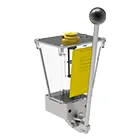
Hand pump series 3106000
For oil and fluid grease – metering valve lubrication systems

Single stroke pumps
Hand-operated pumps for oil and grease

Manual Pumps 156000 Series
Pump series 156000 – For oil and grease

Pump series 34150–34160
Hand pump for oil and grease
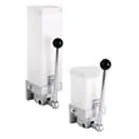
AB-H SINGLE PISTON PUMP
Robust hand lever pump for daily or infrequent lubrication with oil or grease
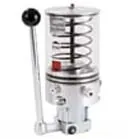
AI-H Single Piston Pump
For progressive systems – ideal for lubricating machine tools
Technology
Technical data and selection
Hand pumps are not a stopgap. They are the right answer wherever a point needs servicing rarely but in a controlled way — on special-purpose machines, at maintenance points with no power, and as manual backup for an automatic system. Their decisive advantage is a reproducible dose: one stroke is one fixed volume, no matter how hard the operator pulls.
| Range | Per stroke | Max. pressure | Reservoir | Lubricant |
|---|---|---|---|---|
| Series 15 | 1.7 cm³ | 125 bar | grease 1 kg · fluid grease 0.3 l · oil 0.27 l | oil 32–1000 cSt · grease NLGI 0–2 |
| Single-stroke pumps | 7.5 cm³ | 70 bar | 0.8 l oil · 0.8 kg grease | oil or grease · outlet M10×1 |
| Series 3415 | 3.4 cm³ per up/down stroke | 150 bar | – | grease |
| Series 3416 | 3.4 cm³ per up/down stroke | 130 bar | 1–6 l | oil |
| Series 3106000 | 10 cm³ | – | 1 l | oil · fluid grease NLGI 00 |
| TPump 216035–216055 | 2 cm³ per actuation | 5 bar | 200 cm³ | oil 100–250 cSt · 2 outlets · 40 µm filter |
| Smile | up to 5 cm³ per cycle | – | 500 cm³ · 1 l · 3 l | oil · integrated outlet block |
| Series 12100 | 15 cm³ | 3 bar | – | oil 100–250 cSt · 2 outlets |
| Series 12130 | 3.7 cm³ | 3.3 bar | – (no reservoir) | oil · mounted with M5 screws |
| Series 156000 | 3.4 cm³ per forward-and-return stroke | 30–150 bar adjustable | 1 · 2 · 5 l | oil from 15 cSt or grease · dual line |
| AB-H single piston pump | 10.5 cm³ | 45 bar | – | oil and fluid grease 50–750 mm²/s · NLGI 000–0 |
Source: DropsA manufacturer data, retrieved 31 July 2026 – Serie 15 · Einfachhubpumpen · Serie 3415/3416 · Serie 3106000 · TPump 216035–216055 · Smile · Serie 12100 · Serie 12130 · Serie 156000 · AB-H. The figures in the respective datasheet are binding.
The pressure tells you which system the pump is built for
The spread from 3 to 150 bar in this table is not a quality ladder but a system assignment. The Series 12100 at 3 bar and the TPump at 5 bar feed oil systems with restrictors or metering elements, where the pressure only has to fill the line. The Series 156000 at 30 to 150 bar is a dual-line pump: it must build the pressure that triggers the changeover — DropsA states line inversion at 120 bar.
In between sit the single-point and progressive pumps at 45 to 150 bar. Choosing by volume per stroke instead of system pressure is the mistake that keeps being made.
Volume per stroke is the real sizing figure
On a hand pump you do not size the flow rate, you size the number of strokes. A point needing 5 cm³ is three strokes on the Series 15 and half a stroke on the Series 3106000 — and that difference decides whether the maintenance instruction is followed. “Twenty strokes per point” gets shortened in practice; “two strokes” does not.
Maximum pressure separates the ranges by application, not by quality. 150 bar for the grease version 3415 against 130 bar for the oil version 3416 is no accident: in the same line, grease needs more pressure because it has to overcome a yield point before it flows at all. What that means for choosing the medium is covered in our article on NLGI classes.
Read the lubricant limits precisely
The Series 15 is approved for oil from 32 to 1000 cSt and grease to a maximum of NLGI 2, the Series 3106000 for oil and fluid grease of class NLGI 00. These are limits, not suggestions: NLGI 00 and NLGI 2 differ by more than 130 tenths of a millimetre in worked penetration, and a pump designed for fluid grease will not reliably draw an NLGI 2 grease.
The Series 3106000 is intended explicitly for 33V and 01 systems and has a vent that depressurises the line after every cycle — on single-line systems with injectors that is the precondition for the injectors to recharge at all.
Looking for the right product?
We support you with selection, design and quotation – oil & grease, for every application.
Knowledge
Further content
- Electric pumps – automated lubrication
- Pneumatic pumps – compressed air operated
- Progressive distributor – uniform distribution
- Dual-line systems – long distances & high viscosity
- Cycle sensors – monitoring lubrication cycles
- MAGNOM® filter – particle & magnetite separation
- Industrial oils – selection & application
- Troubleshooting the ZSA – checklist
- Central lubrication – basics & planning
- Contact & Offer – Individual advice