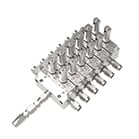
Progressive distributor selection: What really matters besides the data sheet
Progressive distributors are often only compared based on outputs and size. In practice, however, the network image, medium, diagnostic requirements and maintenance situation are at least as important.
In-depth on the topic: further technical basics for central lubrication and Progressive lubrication in practice. These contributions complement the system decision in practice.
Why the distributor is more than just a component
The progressive distributor is a visible core part of the system, but it only develops its value in interaction with the pump, medium and pipe network. If it is selected in isolation, misconceptions about function and reserve quickly arise.
Especially in retrofit projects, it is important not only to mirror the old distributor, but also to understand the entire circuit and the distribution sequence.
Which selection criteria count?
The decisive factors are the number and character of the lubrication points, medium, conveying behavior, diagnostic requirements and practical accessibility in service. A distributor that fits on paper can be disadvantageous in everyday life if control and replacement become unnecessarily complex.
Integration into the disruption concept is equally relevant. If stroke or functional control is important, the selection must take this into account from the outset.
- Do not choose a distributor that is separate from the network
- Plan diagnostics and service access
- Consider the medium and conveying behavior early on
Errors in practice
Common errors include purely catalog-based selection, lack of documentation of the distribution sequence and late integration of maintenance. This creates systems that, although technically feasible, are unnecessarily prone to failure or confusing during operation.
This effect is particularly exacerbated when there are several similar machines when there is a lack of standardization and each system is constructed slightly differently.
What makes the difference economically
A well-selected progressive distributor not only makes lubrication easier, but also troubleshooting, documentation and spare parts inventory. This makes it more valuable from an economic perspective than its pure unit price suggests.
Particularly in machine parks with several similar systems, clear selection and standardization create a noticeable advantage in everyday service.
Practical recommendation
When making your selection, work with a clear network diagram and define in advance how diagnostics and maintenance should proceed later. The appropriate progressive distributor can then be determined much more specifically.
As an article, this topic strengthens the connection between progressive lubrication, lubrication pumps, spare parts and comparison sites and adds a very practical selection node to the Authority Graph.
← Back to the blog