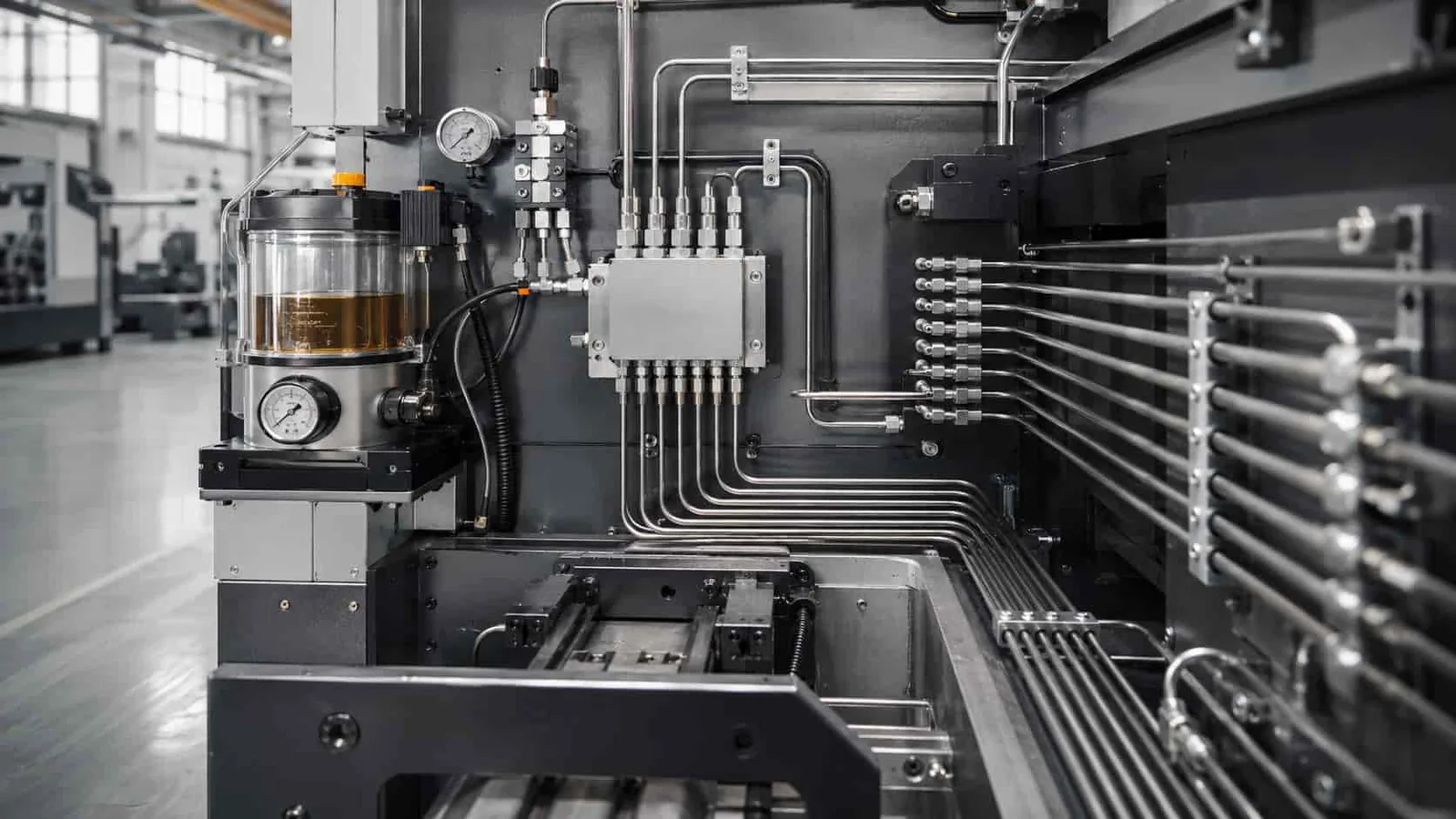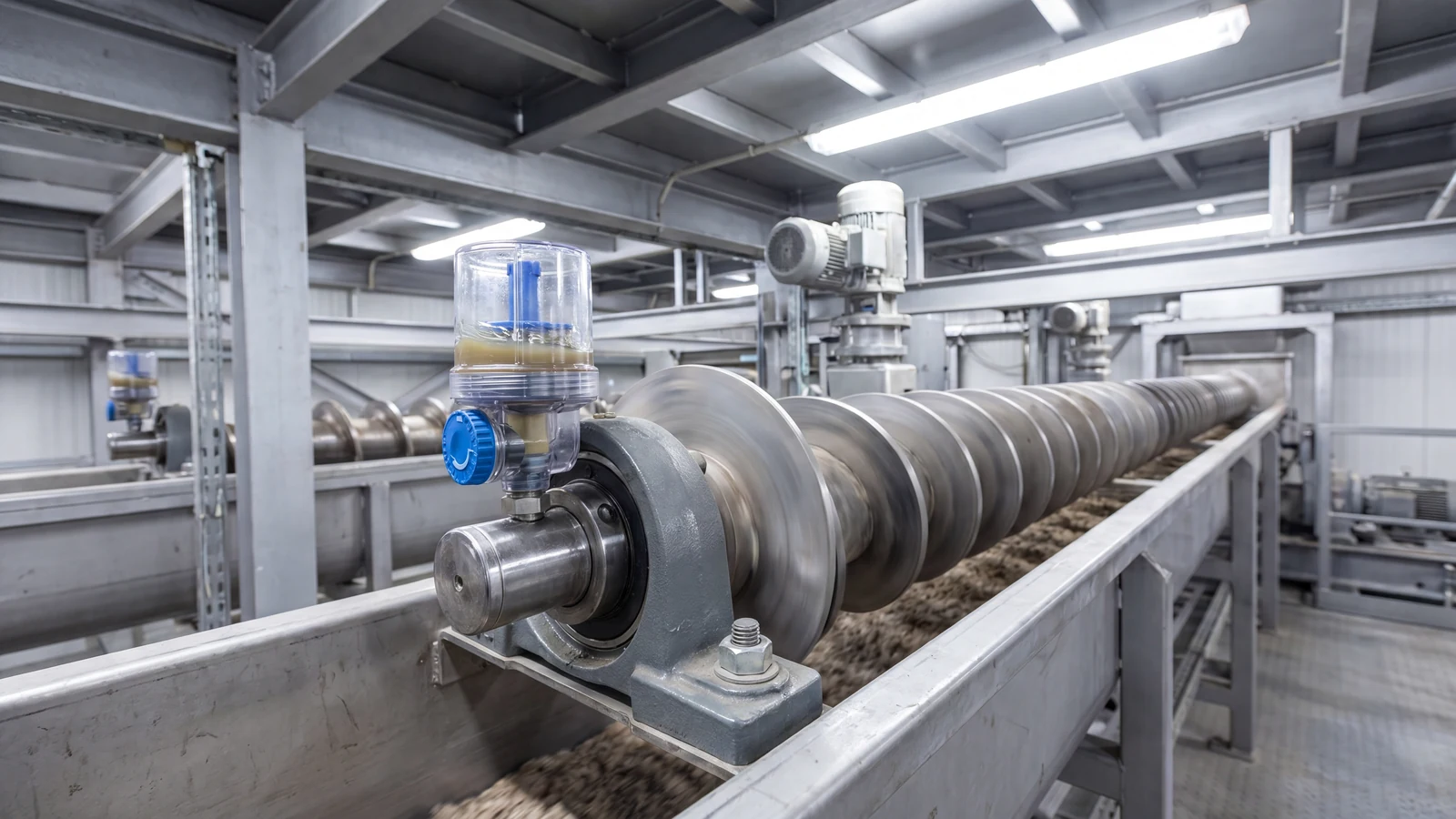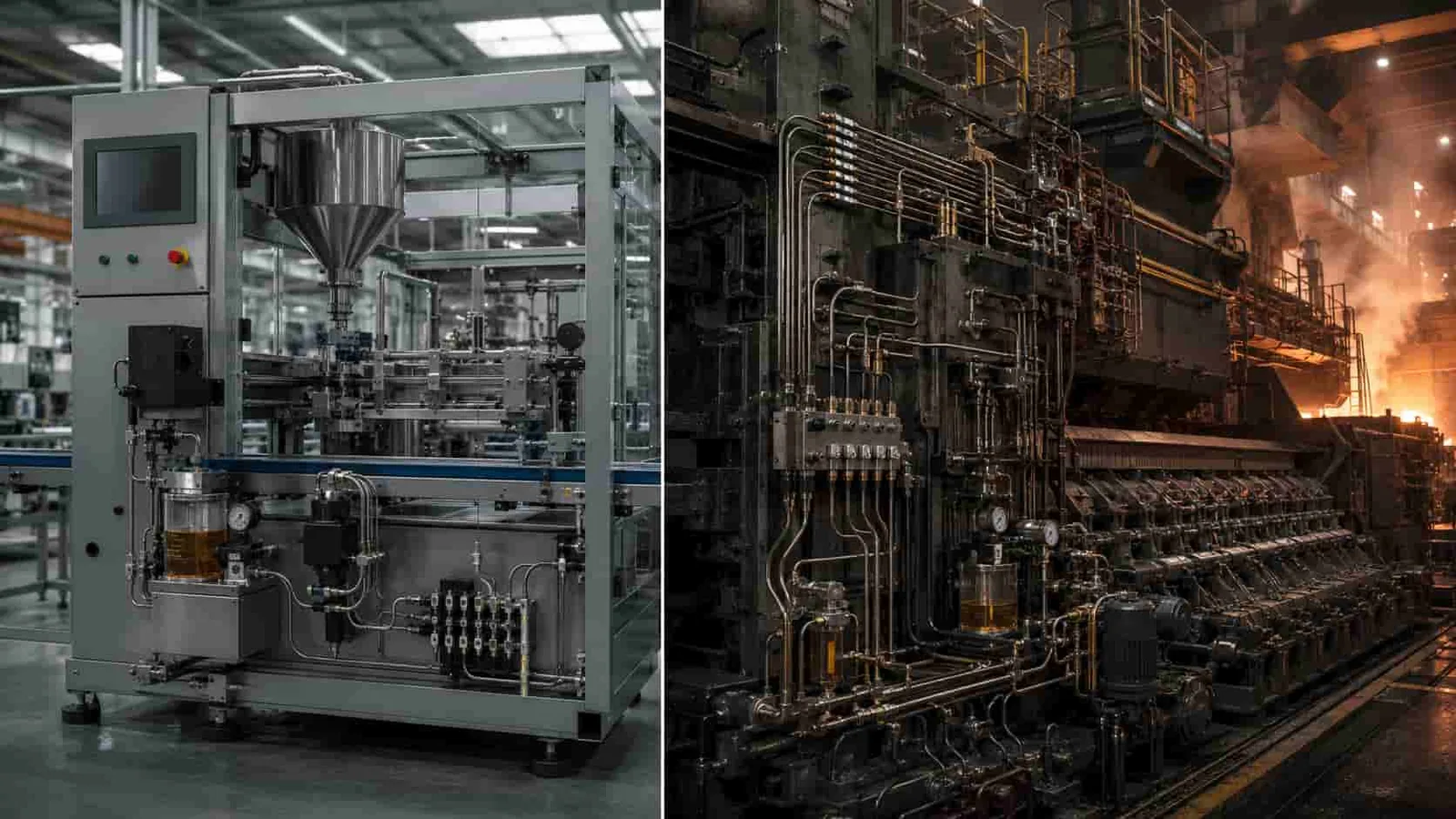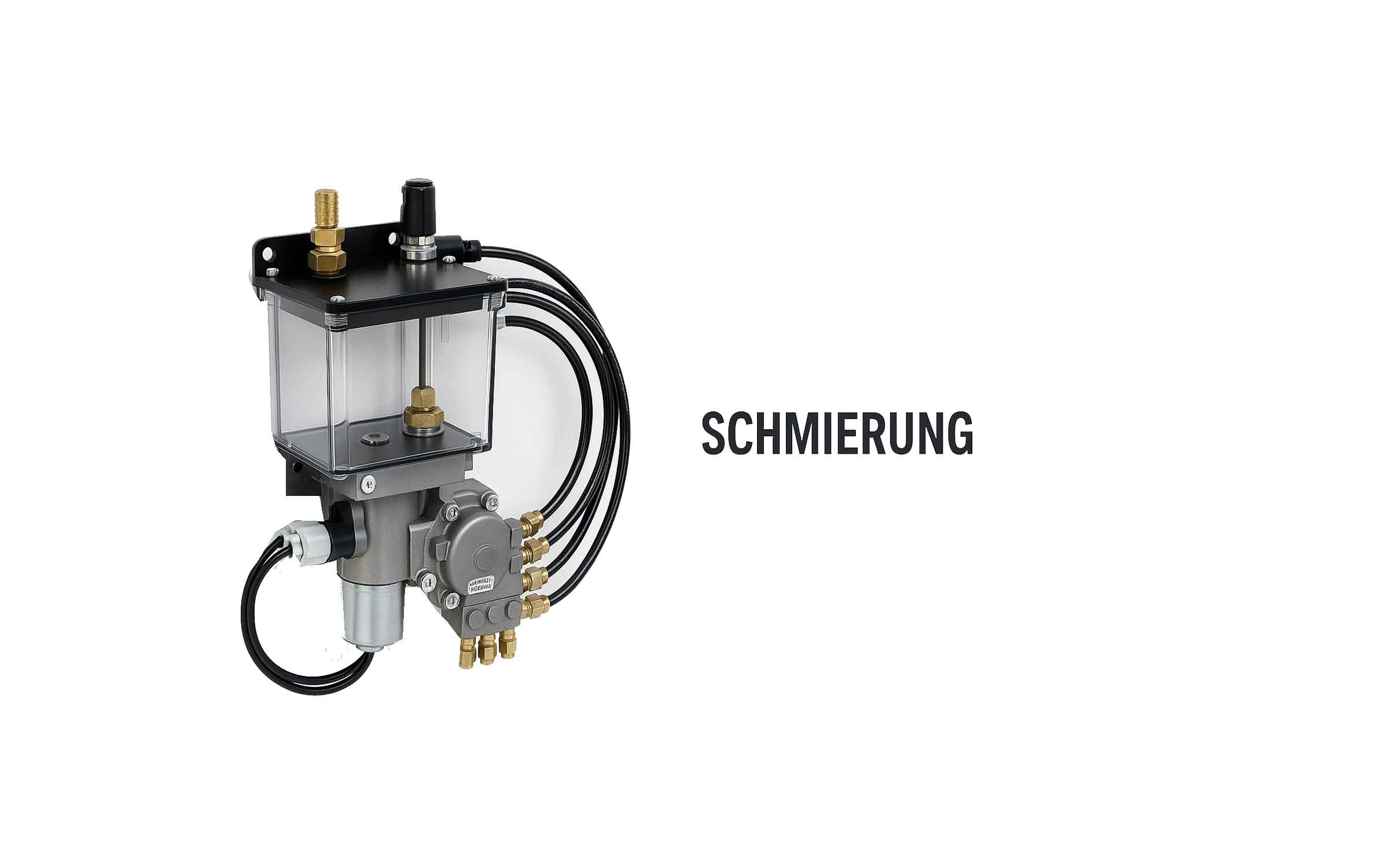
Central lubrication systems supply several lubrication points on a machine in an automated, reproducible and needs-based manner. This reduces manual maintenance costs, the lubrication quality remains constant and downtimes are reduced.
Why central lubrication
- Less wear and longer service life of components
- Plannable maintenance instead of ad-hoc deployments
- Reduced lubricant consumption through defined quantities
System types at a glance
- Introduction – compact, for short lines and moderate scores
- Dual line – robust for long cable routes and many points, especially a. Grease
- Progressive – fixed distribution logic, good monitoring of individual circuits
- circulation (oil circuit) – continuous oil supply including cooling effect
- Minimum quantities (MMS/oil-air) – very precise dosage, clean applications
Core components
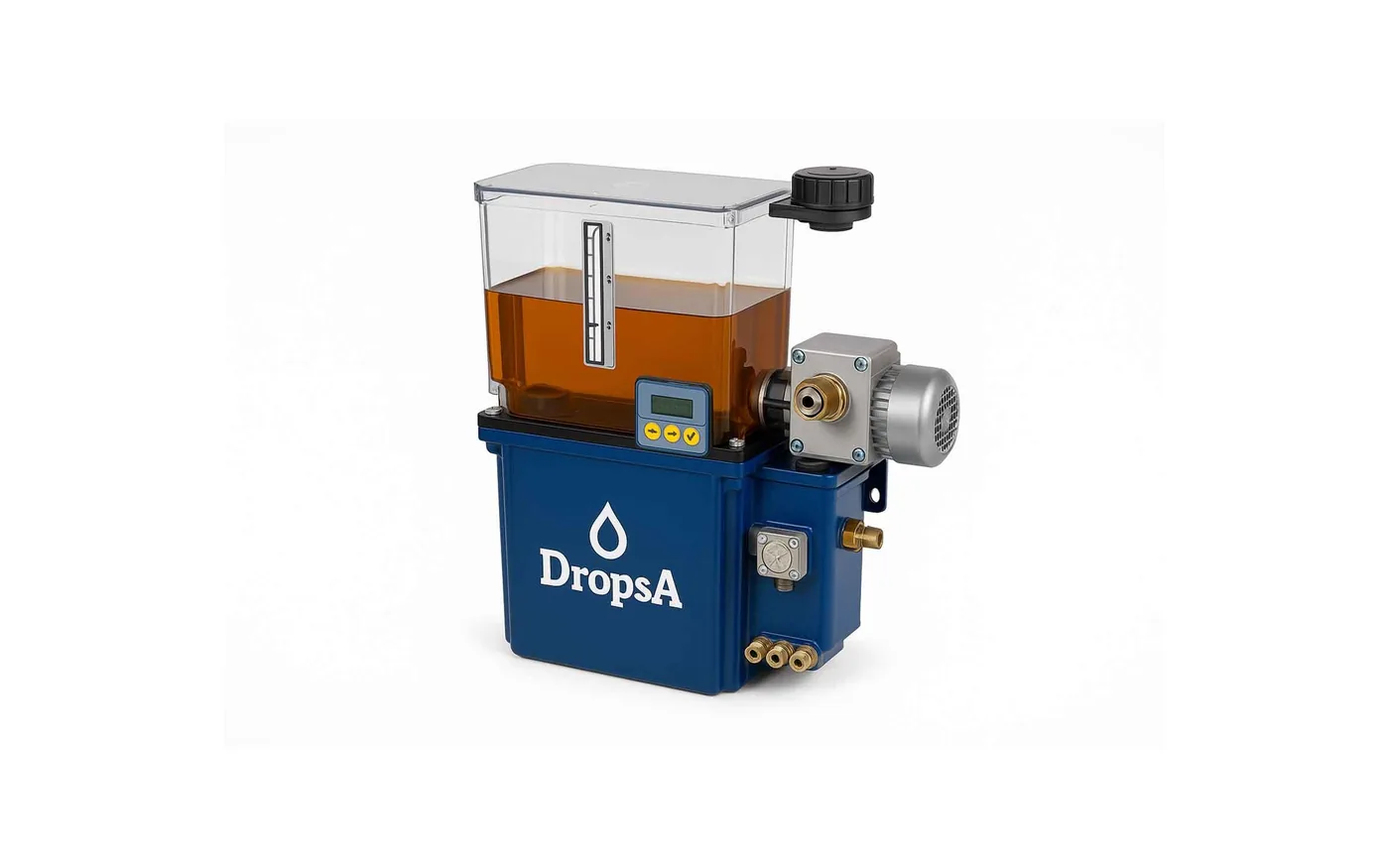
- Pump/unit: Performance & pressure suitable for the pipe network and medium (oil/grease)
- Doser/distributor: Single/dual line, progressive or oil circuit
- Lines & Fittings: dimensioned according to distance, temperature and viscosity
- Sensor technology: Pressure, flow and stroke sensors for messages/alarms
- Steering: Interval, quantities, faults – connection to HMI/PLC
Selection criteria
- Number of lubrication points & line lengths
- Medium: Oil (viscosity) or grease (NLGI 00-2)
- Temperature window, environment, hygiene requirements (H1 optional)
You can find more basics and examples on our website Central lubrication. You can see products and components in the Product overview.